
Deflection vs revenue: support is your most underrated sales channel
Most teams grade AI support by tickets deflected. That metric hides the bigger opportunity: every support question is a buying signal. Here is how to treat support as a sales channel.

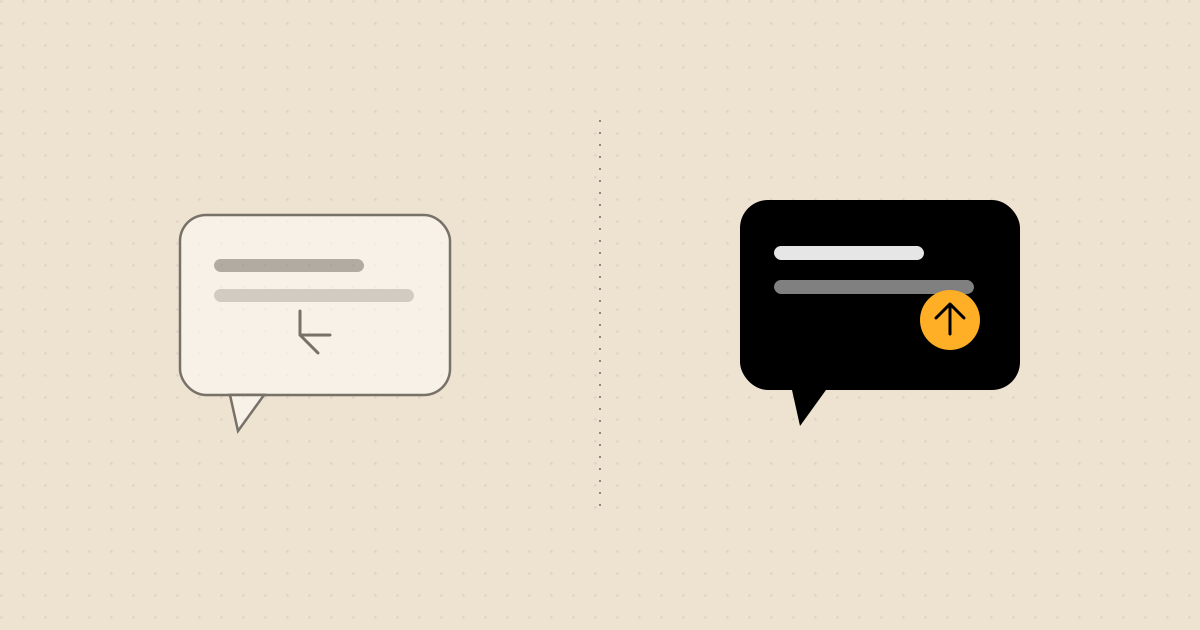
Ask most teams how their support AI is doing and you will hear one number: deflection rate. How many tickets it handled without a human. It feels like the right metric. It is quietly the wrong one.
Deflection measures what you avoided. It says nothing about what you earned. And in e-commerce, that gap is enormous, because the person asking a support question is very often a person about to buy.
Every support question is a buying signal
Look at what customers actually ask a store:
- "Is this in stock in medium?"
- "Does it run small?"
- "Will it arrive before Friday?"
- "What is the difference between these two?"
- "Can I return it if it does not fit?"
None of those are complaints. Every one is someone standing at the register with their wallet half out, asking for the one reassurance they need to finish. A deflection bot answers the question and marks the ticket closed. A good agent answers the question and helps them buy the right thing.
Same conversation. Wildly different outcome.
Why "deflection" caps what your tool is worth
When you measure support by tickets avoided, you have quietly defined it as a cost center. The best it can ever do is cost you a little less. So you buy the cheapest tool that deflects, you judge it on a percentage, and you never ask the only question that matters to the business: did it make us any money?
That framing leaves the most valuable conversations on the table. The customer who asked "does it run small?" got a tidy answer and left, when one good recommendation and a nudge to the right size would have closed the sale. You will never see it, because deflection rate looks great either way.
What changes when you measure revenue
Flip the metric and everything downstream changes. Now the agent's job is not to end the conversation; it is to move it forward. The same agent that answers the sizing question can:
- recommend the right product from your live catalog,
- build the cart or point the customer to checkout,
- apply a discount when it helps,
- and answer the returns question that was the real hesitation.
It still does support, beautifully. But support becomes the front door to a sale instead of a dead end. This is why we built Totebot as one agent that sells and supports in the same conversation, rather than a deflection bot bolted next to a separate sales funnel. The customer does not see two jobs. They see one helpful conversation.
The number that actually matters: attributed revenue
Here is the metric that should replace deflection rate: revenue attributed to conversations. When a chat leads to a purchase, you should be able to see it, in money. "This conversation drove a 240 euro order." Not "we deflected a ticket." Not "engagement was up." A dollar figure tied to a specific conversation.
That number does three things deflection rate never could. It tells you the tool pays for itself, with proof. It tells you which questions are secretly your best sales pitches, so you can get better at them. And it changes how you treat support internally, from a queue to drain to a channel to grow.
When a merchant sees their agent's first attributed sale, the conversation about whether the tool is worth it ends. You do not argue with a number that has a currency sign in front of it.
How to turn support into a sales channel
You do not need to be clever about this. You need a few things wired up:
- Connect your store. The agent cannot sell what it cannot see. Sync your catalog so it recommends real products with real prices and stock.
- Tell it to recommend, not just answer. In your instructions, make selling part of the job: when a customer is choosing, suggest the right option and a next step. Keep it a soft sell, not a hard one.
- Keep it one conversation. A customer who asks on WhatsApp at lunch and checks out on the site at night is the same customer. The thread, the cart, and the context should follow them across channels.
- Read the questions as signals. The questions your agent gets most are your funnel, in plain language. The ones it answers badly are a knowledge gap and often a lost sale. Fix the worst one every week.
- Measure attributed revenue, not deflection. Put the dollar number on the dashboard where the whole team can see it. What you measure is what you improve.
The honest caveat
None of this means turning your support agent into a pushy salesperson. The fastest way to kill trust is to answer a returns question with a sales pitch. Support quality comes first, always. The point is subtler: when a customer is clearly trying to buy and just needs help deciding, a good agent helps them decide. Soft sell, right moment, real usefulness. Done well, customers do not feel sold to. They feel helped, and they buy more.
The takeaway
Stop counting the tickets you dodged. Start counting the sales you closed. The conversations are already happening, your customers are already asking, and most of those questions are buying signals wearing a support costume. The teams that win are not the ones with the highest deflection rate. They are the ones who realized support was a revenue channel the whole time.
If you want to see what that looks like on your own store, getting started takes an afternoon.
Build your own agent
Go from sign up to a live agent in an afternoon.
Keep reading
6 ways teams use the Totebot Help Desk
The AI handles most conversations on its own. The Help Desk is for the ones it should not finish alone. Here are six situations where a shared team inbox earns its place, and exactly what happens in each.

Best practices for building a great agent
The habits that separate agents customers trust from agents they abandon: how to organize knowledge, write instructions that hold up, set up escalation, and improve from real conversations.